Kathak is one of India’s major classical dance traditions, known for its intricate footwork, rhythmic compositions, graceful movements, spins and expressive storytelling. Over generations, different artistic lineages developed within Kathak, giving rise to distinct gharanas, or schools of artistic tradition.
Among the best-known Kathak traditions are the Jaipur, Lucknow and Banaras Gharanas. Each has developed its own emphasis in rhythm, movement, expression and presentation, while sharing the fundamental vocabulary of Kathak.
What Does Gharana Mean in Kathak?
The word gharana refers broadly to an artistic lineage in which knowledge, technique and performance traditions are transmitted from guru to student across generations. A gharana is therefore more than a geographical location it represents a particular approach to training, interpretation and presentation.
Over time, the three major Kathak gharanas developed distinctive identities, although modern dancers may incorporate influences from more than one tradition.
Jaipur Gharana: Rhythm, Footwork and Technical Strength
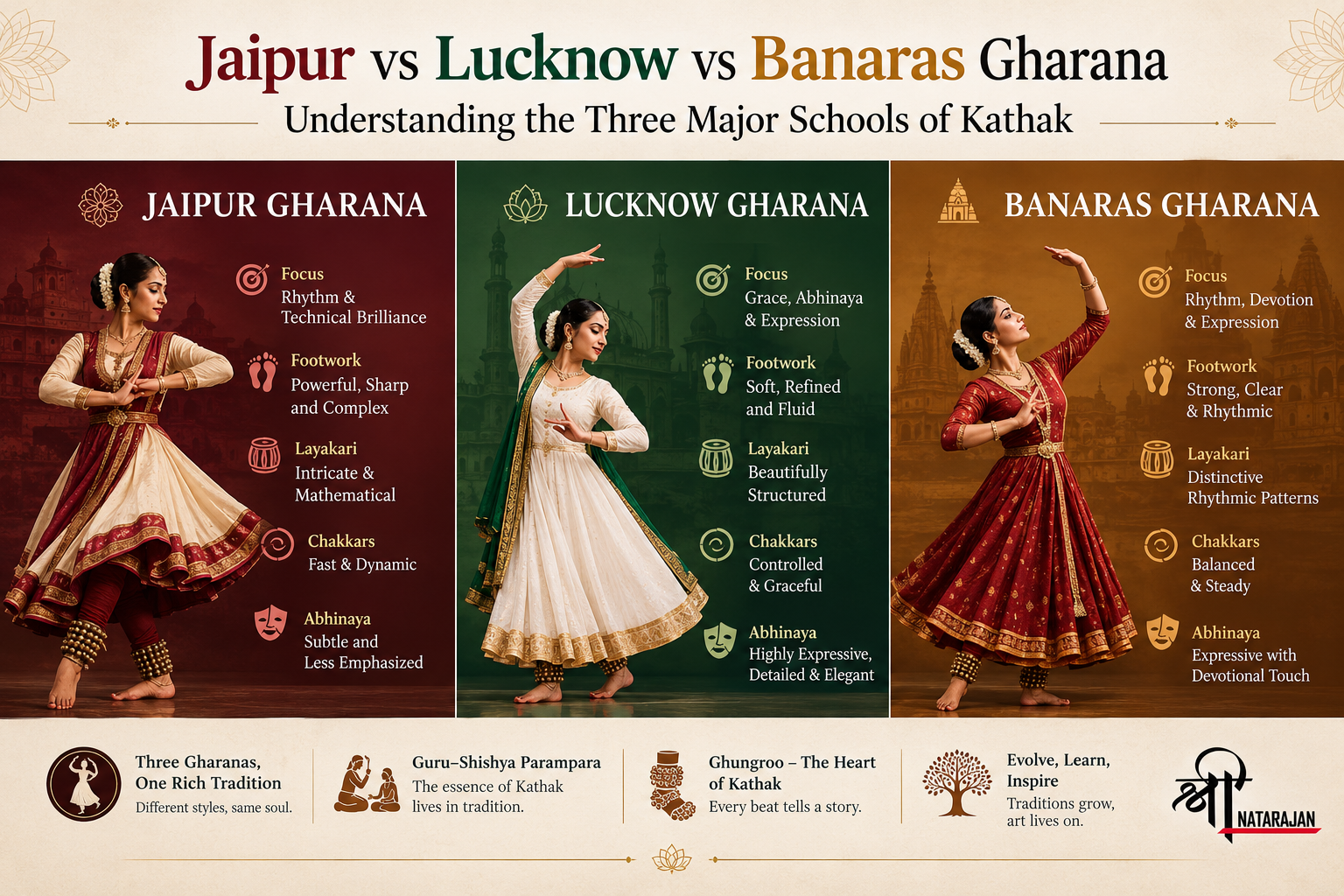
The Jaipur Gharana is particularly associated with powerful footwork, intricate rhythmic patterns and technically demanding compositions. The relationship between the dancer, rhythm and percussion is an important part of its character.
Students trained in this tradition often develop strong tatkar (footwork), complex todas and parans, and an emphasis on rhythmic precision. The style is frequently associated with energetic movement and technical intensity.
For dancers who enjoy exploring the mathematical and rhythmic aspects of Kathak, Jaipur’s approach offers a fascinating perspective on the relationship between movement and tala.
Lucknow Gharana: Grace, Expression and Abhinaya
Lucknow Kathak is often recognized for its elegance, subtle gestures, controlled movements and expressive storytelling. Abhinaya, including the interpretation of poetic and musical compositions such as thumri, has an important place in the tradition.
The Lucknow Gharana developed strongly under the patronage of the Awadh court and is closely associated with the Maharaj family lineage, including prominent gurus such as Shambhu Maharaj and Birju Maharaj. The Sangeet Natak Akademi describes Shambhu Maharaj as particularly noted for bhava, the emotive aspect of Kathak.
Banaras Gharana: Rhythmic Precision and Devotional Expression
The Banaras Gharana, also known as the Benares or Janaki Prasad tradition, developed around Varanasi and is associated with the lineage of Pandit Janaki Prasad. Research on the tradition highlights its strong movement vocabulary and devotional presentation.
The gharana is also associated with distinctive approaches to rhythmic syllables, footwork and devotional expression. Its historical development and lineage give it a distinct place among the major Kathak traditions.
Jaipur vs Lucknow vs Banaras: What Is the Difference?
A simple way to understand the broad emphasis is:
- Jaipur: strong footwork, rhythm and technical complexity
- Lucknow: grace, subtle movement and expressive abhinaya
- Banaras: rhythmic clarity, strong movement and devotional expression
These descriptions should not be treated as rigid rules. Kathak has continued to evolve, and contemporary performers often explore techniques and ideas across different gharanas. Kathak Kendra itself has historically provided opportunities for Jaipur and Lucknow traditions to interact and develop new forms of presentation.
Do Kathak Ghungroos Differ Between Gharanas?
Ghungroos remain an important part of Kathak training across these traditions because they make footwork audible and help dancers develop rhythmic precision. However, the choice of ghungroo is generally influenced more by the dancer’s training level, guru’s guidance, bell count, weight and comfort than simply by the gharana.
If you are beginning Kathak, you can also explore our guides on how to choose the right ghungroo for Kathak dance and how many ghungroos a beginner should wear.
Conclusion
Jaipur, Lucknow and Banaras represent different artistic perspectives within the rich tradition of Kathak. Jaipur brings strong rhythmic and technical emphasis, Lucknow is celebrated for grace and expressive interpretation, while Banaras carries its own distinctive combination of rhythmic and devotional qualities.
Rather than asking which gharana is the best, it is more meaningful to understand what each tradition contributes to Kathak and how these traditions continue to evolve through today’s gurus, teachers and dancers.